Kerala's Rooftop Solar Moment in 2026: Why Smart Homes & Businesses Are Installing Now
In 2026, solar in Kerala has moved from "good idea" to financial advantage. Electricity costs are rising, buyers want predictable monthly expenses, and rooftop solar is now supported by clearer portals, subsidy processes, and evolving state policy frameworks that aim to speed up approvals and improve service expectations.
If you're a homeowner in Kochi/Ernakulam or a business owner anywhere in Kerala, the question is no longer "Should we consider solar?"
It's: How soon can we lock in savings, and who can install it correctly?
This guide breaks down the 2026 market reality, what's changing in Kerala, and how to make a safe, ROI-driven solar decision.
What's happening in Kerala's solar market in 2026
1) Policy + process are pushing faster adoption
Kerala's power policy direction (draft) points towards streamlining rooftop solar interconnection and net metering processes aligned to the PM Surya Ghar scheme for residential consumers, while also aiming to revisit distributed solar limits and service frameworks.
In simple words: Kerala is actively shaping rules to make rooftop solar easier to approve, safer to commission, and better supported over time.
2) The national rooftop push is real (and it's funded)
The PM Surya Ghar: Muft Bijli Yojana and MNRE's grid-connected rooftop programme are designed to accelerate residential rooftop adoption through subsidy and verified vendor/discom workflows.
3) KSEB workflows and costs are becoming more consumer-friendly
KSEB has publicly discussed steps like waiving certain rooftop solar fees under the PM Surya Ghar scheme (pending regulatory alignment), aimed at reducing friction for consumers.
And KSEB's own portal ecosystem for rooftop solar exists for application, policy, and regulation access.
What it means for you: in 2026, the market is moving toward faster processing + higher adoption, which also means installer quality matters more than ever.
Is solar panel installation worth it in Kerala in 2026?
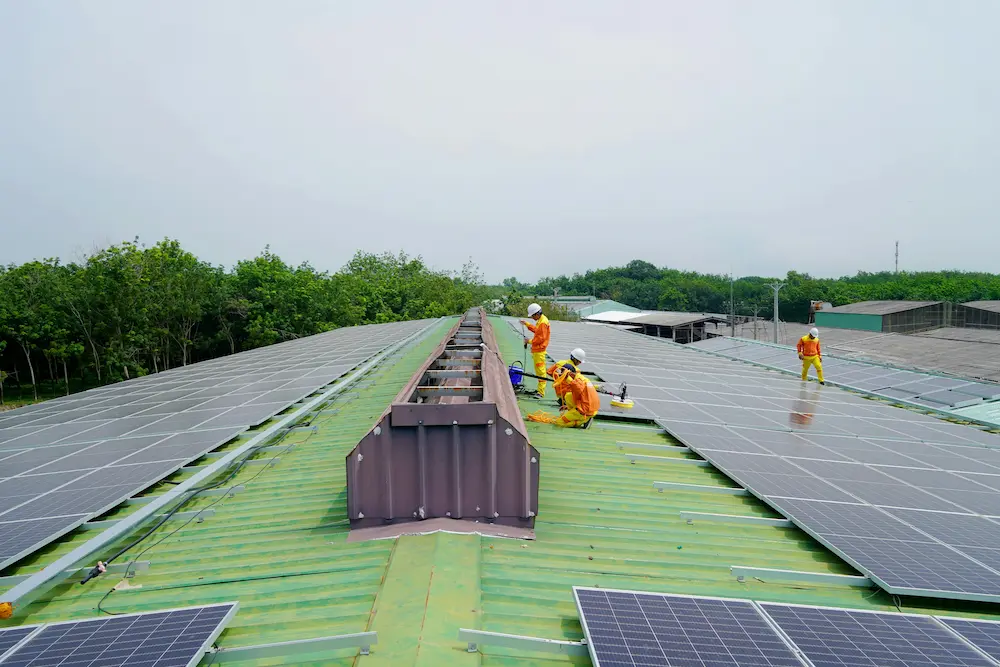
For most households and many businesses: Yes, if the system is sized correctly and installed professionally.
Solar pays off in Kerala because:
- Rooftop solar offsets your grid consumption and stabilises your monthly outflow (especially when usage is consistent).
- Government programmes support adoption and verification workflows.
- Kerala's policy direction and regulations continue to focus on distributed solar integration, metering/billing frameworks, and operational support.
The real driver in 2026: buyers don't just want solar panels they want predictable savings, clean paperwork, safe commissioning, and after-sales support.
That's exactly why choosing the right installation partner is the decision.
The biggest mistake Kerala buyers make: buying kW without buying correctness
Most solar disappointments are not because "solar doesn't work."
They happen because:
- The system is undersized or oversized,
- The shading/roof angle wasn't assessed properly,
- Components were chosen for price instead of performance,
- Protection and earthing were ignored,
- Monitoring and maintenance were treated as optional.
In 2026, quality buyers in Kerala are shifting to a more mature mindset:
"I want a system that performs for 25 years—not a cheap install that becomes a headache."
At SolarMaster, we focus on:
- Correct load calculation
- Proper structure and waterproofing discipline
- Safety checks and protection systems
- Clean documentation and handover monitoring + support
How to choose the right solar system in Kerala (2026 buyer checklist)
Step 1: Start with your electricity behaviour
You don't buy solar based on roof size alone. You buy based on:
- Monthly consumption pattern
- Daytime usage (solar hours)
- AC usage hours
- Future load (extra AC, EV, new appliances)
Step 2: Pick the right system type
- On-grid: best for bill reduction + net metering suitability
- Off-grid: best where backup is critical (battery-based)
- Hybrid: balanced approach for savings + backup
Kerala's billing/time-zone concepts and evolving regulations make accurate design even more important in 2026.
Step 3: Confirm subsidy and portal path
Residential rooftop solar processes are tied to national and state portals and discom workflows.
"What will it cost?" 2026 pricing reality
Costs vary based on:
- Panel and inverter brand
- Structure type (sheet roof vs concrete)
- Cable routing distance
- Protection systems (SPD, lightning protection)
- Metering and approvals
- Battery requirement (if hybrid/off-grid)
Many online price tables exist, but they often don't reflect your roof realities. Treat them as broad indicators only. (Example: public blogs show a wide range for 3kW pricing and post-subsidy numbers; actual quotes differ by roof and component selection.)
What you should do instead: get a site survey and a proper load-based design.
Why businesses in Kerala are moving faster in 2026
For schools, colleges, hospitals, and institutional campuses across Kerala, investing in solar power is both a financially prudent and socially impactful decision. Beyond reduced bills and strong ROI, solar installations strengthen energy resilience, enhance institutional credibility, and reduce carbon footprints — aligning with global sustainability goals.
As the state continues to innovate its solar policies and incentives, the window for impactful solar adoption has never been better.
With Solar Master's expertise, institutions can not only harness solar energy efficiently but also become leaders in Kerala's clean energy transition.
Why Solarmaster is the safe choice in 2026
In a fast-growing market, your installer must be more than "a vendor." They must be a long-term partner.
Solarmaster brings:
- Strong Kerala installation experience (since 2017)
- End-to-end execution: design → documentation → installation → commissioning → support
- Premium components and safety-first engineering approach clean handover and monitoring guidance
Call Solarmaster now and get:
- System recommendation
- Subsidy guidance
- Estimated bill reduction range clear timeline
Switch to Solar in 2026, The Smart Way
Stop guessing. Stop delaying. Get a system that performs.
Call Solarmaster now or book your free site survey.
We'll assess your roof, your usage, your subsidy path and give you a clear plan.